Symptom: You are not good at visualizing and remembering your good shots.
Your stomach starts to turn and your knees start to wobble as you eye the water hazard in front of the tee, the bunker in the distance, or the trees off to the right. You can’t remember ever facing such a tough shot or visualize how to succeed. You think, “better not go there”, and then often go exactly where you didn’t want to go. It’s so frustrating, because you’ve hit that same club plenty of times in the past with no problem at all. You just couldn’t remember and visualize it at the time you needed it most.
Overview: After analyzing the situation and challenges you face on the next shot, remember a similar, previous successful shot and visualize success before starting your pre-shot routine.
Why It Works: To see why, try this simple psychology experiment: “Don’t think about White Bears!” What did you just do? I’ll bet you thought of a White Bear! But you were told not to!
Positive Visualization
As you contemplate your next shot, your Logical Self will dutifully inform you of all the issues you face — the lie, the wind, the tightly tucked pin, your poor shot on the previous hole, the lightning-fast green, the hazards to avoid — all sorts of data. These pieces of data are all important. But they are important only to inform the decision about where to aim. After that decision is made, they are not important at all.
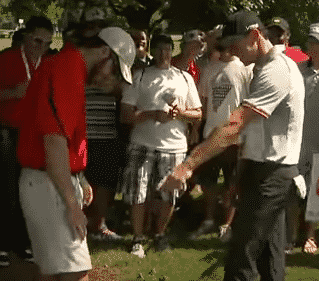
Sir Nick visualizing where he wants his ball to go, not on all the danger in the way.
It’s the same thing in golf. If you are dwelling on the carry over the water hazard (“Don’t go in the water!”), or the number and depth of the sand traps by the green (“Don’t go in the sand”), or the sidehill lie you are on (“Don’t lose your balance”), you really can’t hit a good golf shot. So how do you fight it? With a positive memory of a past success on a similar shot. This is the calming moment you need before you begin the three-phase Aim-Align-Execute method.
When you do this, many positive things happen. Your heart rate goes down. Your tension in your shoulders and arms goes down. Your logical self cannot ignore the fact that, indeed, you have pulled this shot off in the past, even if your last shot was poor. This proves that it can be done, so why not just do it again?
Sir Nick Faldo has much the same message in this visualization tip, have a look:
The Pros Remember the Good
Pay attention to what the pros say in post-round interviews. Do they talk about their head position, or their left arm, or their stance, or their alignment, or anything even remotely tactical or mechanical? No. They use phrases like “it felt good today”, “the putts just found the hole”, “I got it going on number 7 and kept my momentum throughout the back nine”, and so on. These are qualitative, feel-based descriptions. And they make particular note of the good things that happened in the round, not the bad things. “I hit a great shot on 11, had a perfect number,” or “I had a nice uphill putt on 14 and could be aggressive with it,” and so on. They are reinforcing their positive memories. That’s how they play the game. And that’s what you need to do.
Remember the Good Shots
Remember your good shots, and call that positive memory up as you face your next knee-knocker. You’ll play better golf, and have more fun too! Did you like this article? Promise to remember the times when things worked for you the next time you are on the course? Then tell your friends! Like, Share, Tweet, +1, or Email below!